
The brief from a Midrand garment sample room
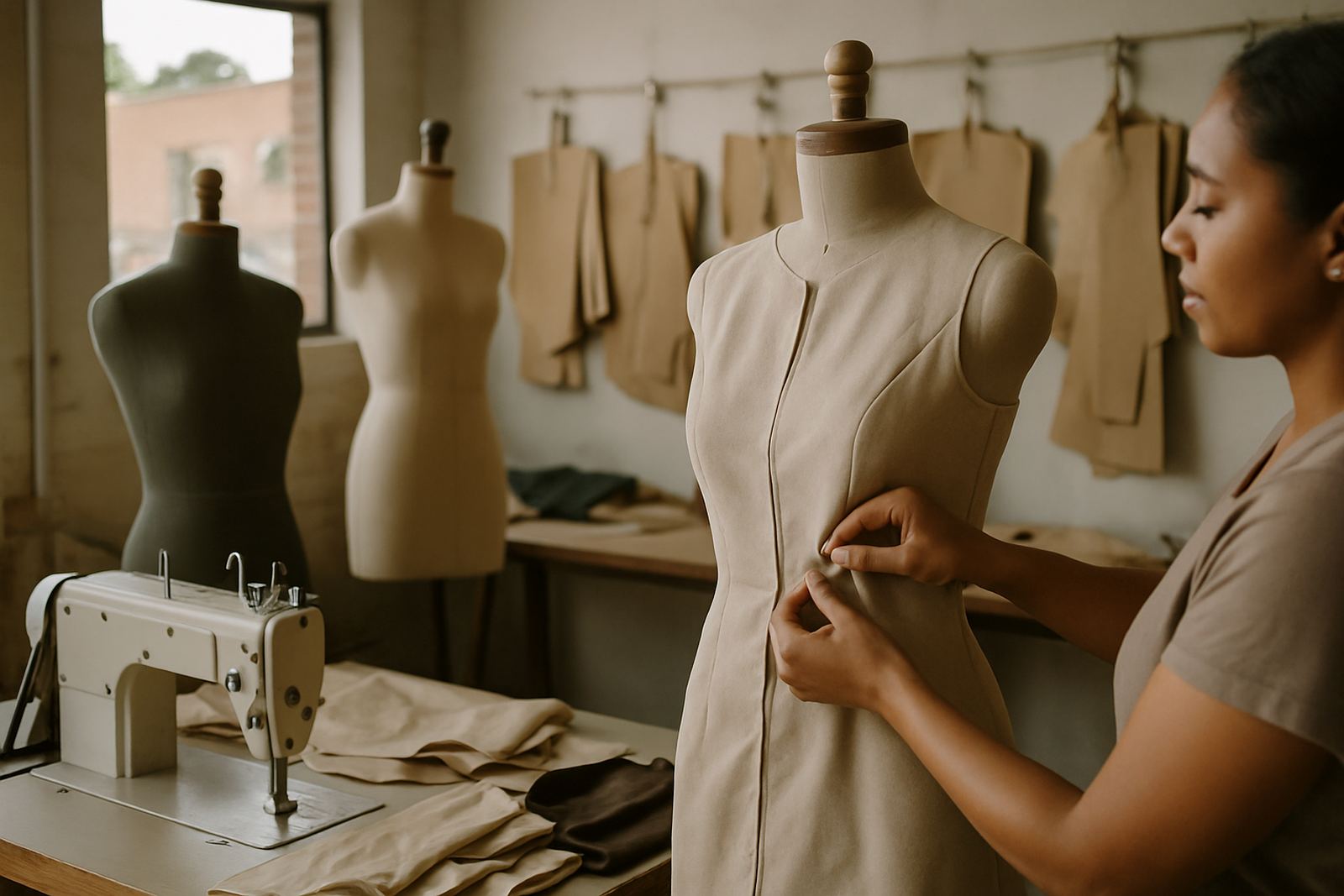
The client was a clothing and soft goods business in Midrand that needed a dedicated sample studio separate from bulk production. The room had to support pattern tests, fitting corrections, small batch runs and occasional embroidery sampling, all in one place and with enough flexibility for different fabric weights.
The brief was practical. They wanted reliable machines that could run through the day, give clean stitch quality on light and medium fabrics, and still cope with heavier seams when a prototype called for it. They also needed the room to be easy for a small team to work in, with sensible table spacing, clear workflow and enough light for detailed finishing.
- Use: prototyping, fit checks and limited production runs
- Team size: 5 operators plus 1 sampler and 1 supervisor
- Room size: 9 m x 7 m sample area
- Power: standard workshop supply with load-shedding backup planning
Constraints on site and what had to be worked around
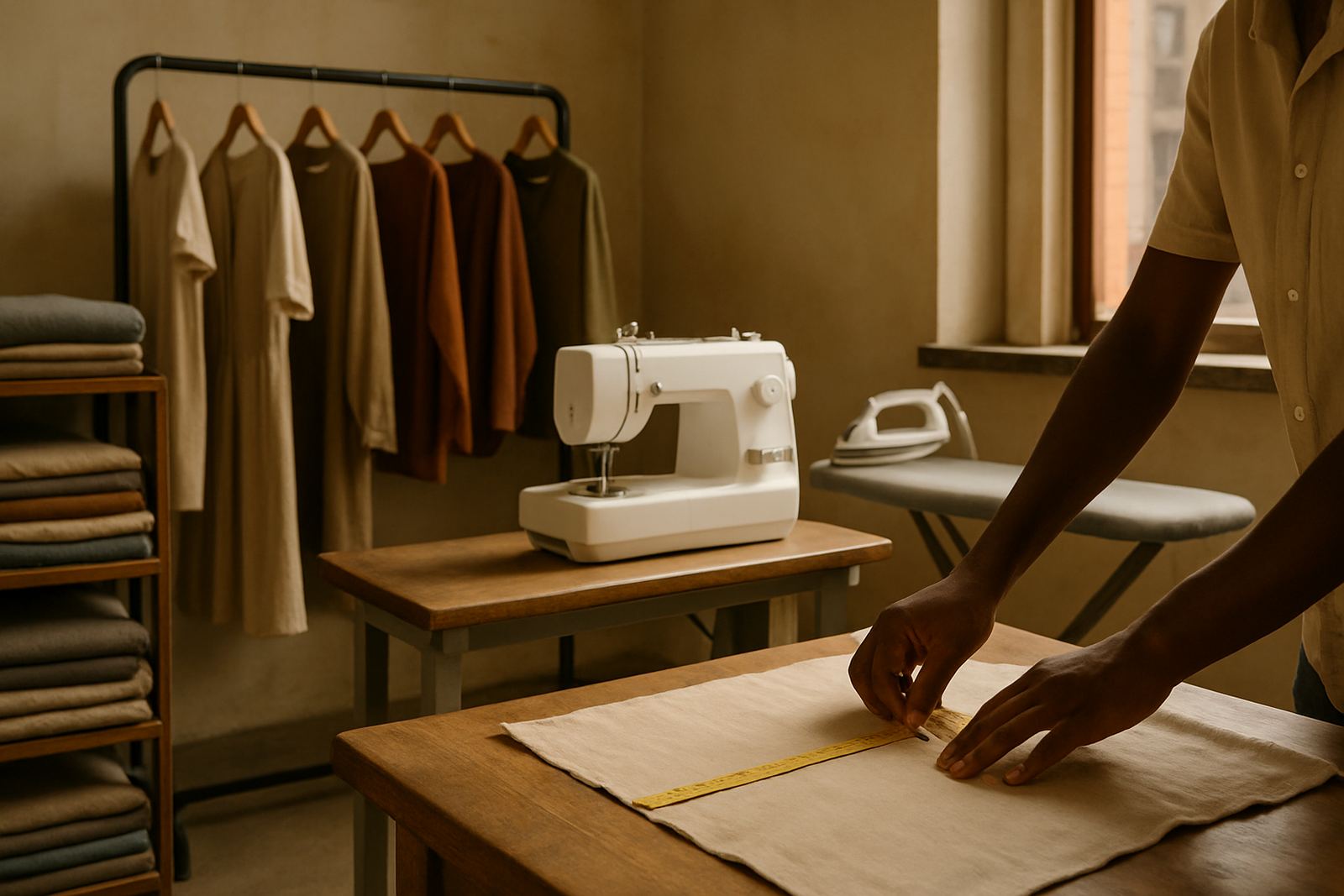
Midrand sites often require a careful balance of space, power and workflow. In this case, the room had a narrow access route, so the equipment had to be brought in section by section and assembled on site. The client also wanted to keep enough open room for rolls, mannequins and cutting tables, which meant every machine position had to justify the space it used.
Power stability was another factor. The studio could not afford long stoppages during sample deadlines, so we planned the layout around equipment that starts cleanly after outages and does not need constant fiddling. We also looked at the ventilation and heat build-up common in enclosed rooms, especially when the pressing station is used for several hours at a time.
- Limited access for delivery and installation
- Need to keep walkways clear for cutting and fitting
- Power interruptions and restart control
- Heat management around pressing equipment
What we supplied and set up
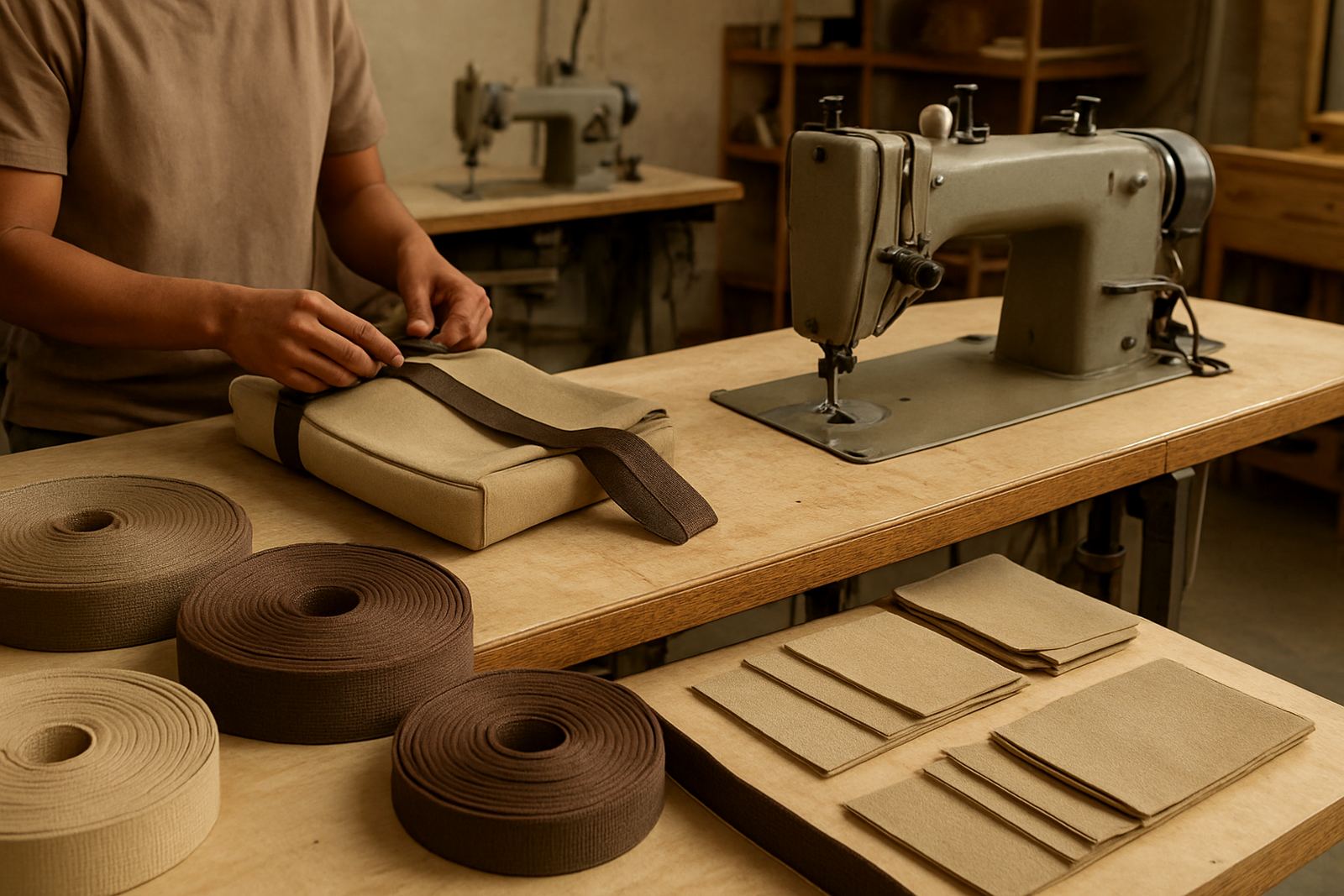
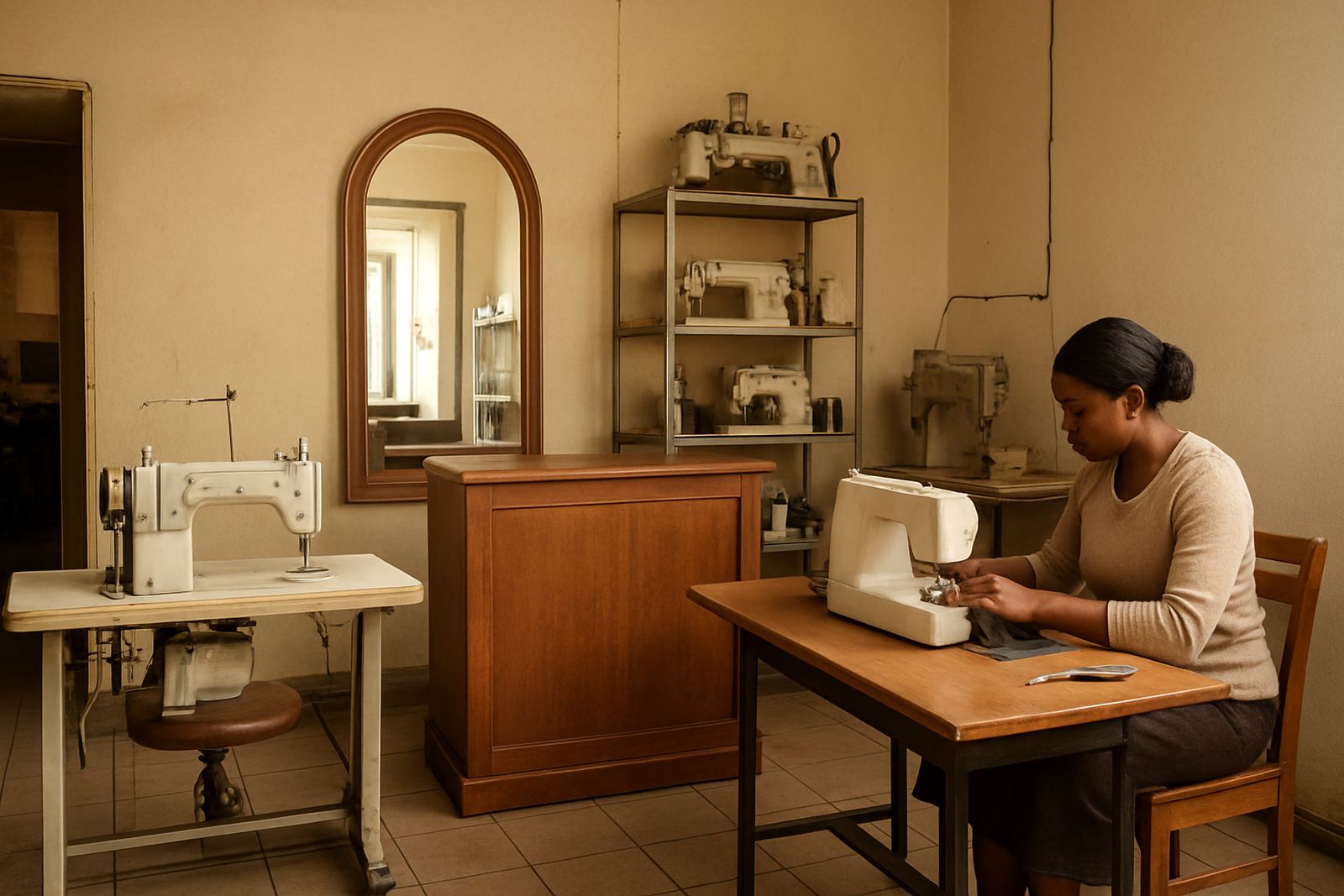
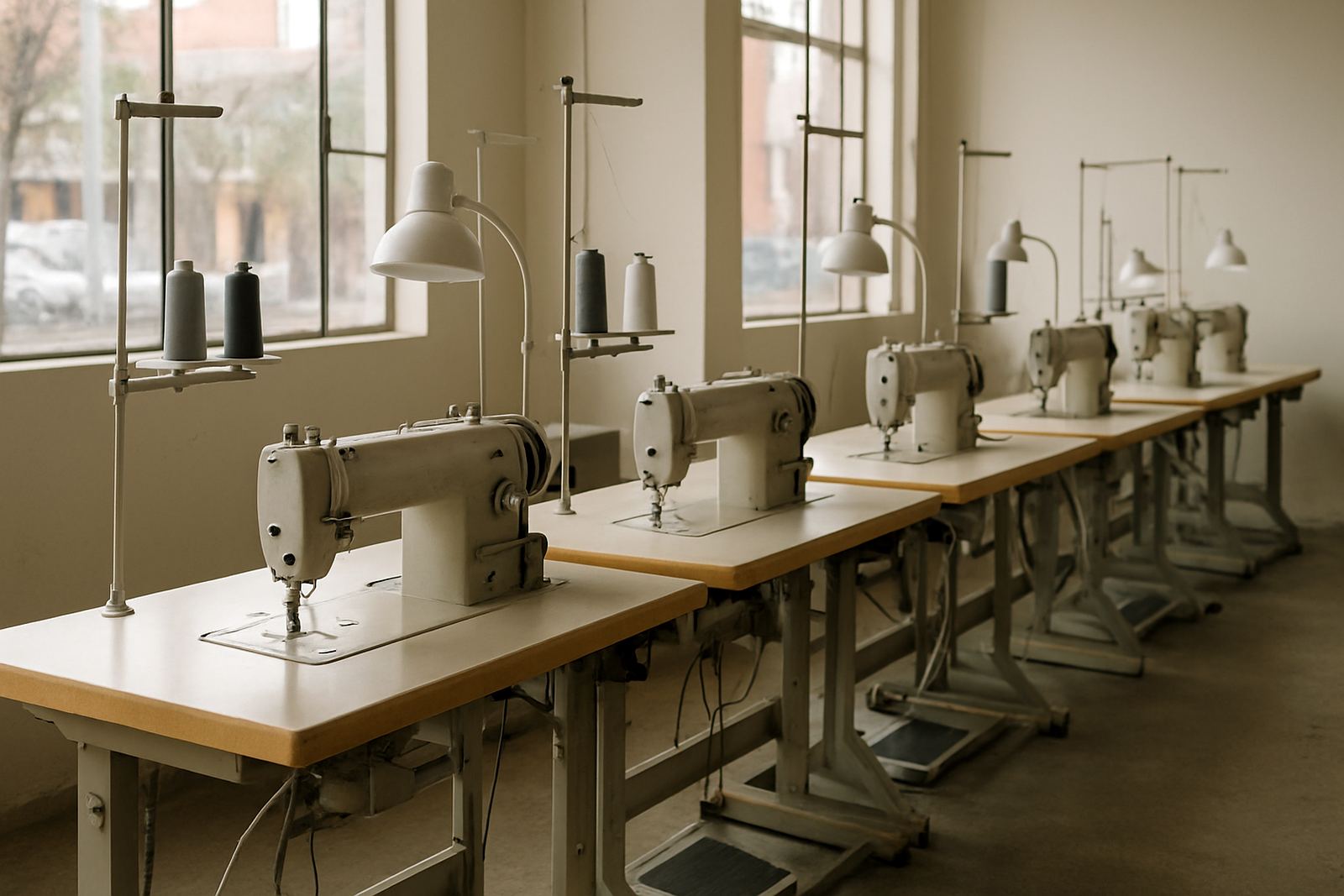
We supplied a mixed line-up suited to sample work rather than full factory volume. That included industrial sewing machines for straight stitching and finishing, a computerised embroidery machine for sample motifs, and a fusing press for collar, cuff and panel bonding tests. We also installed the pressing station, set up thread stands and arranged attachments for different seam types and edge finishes.
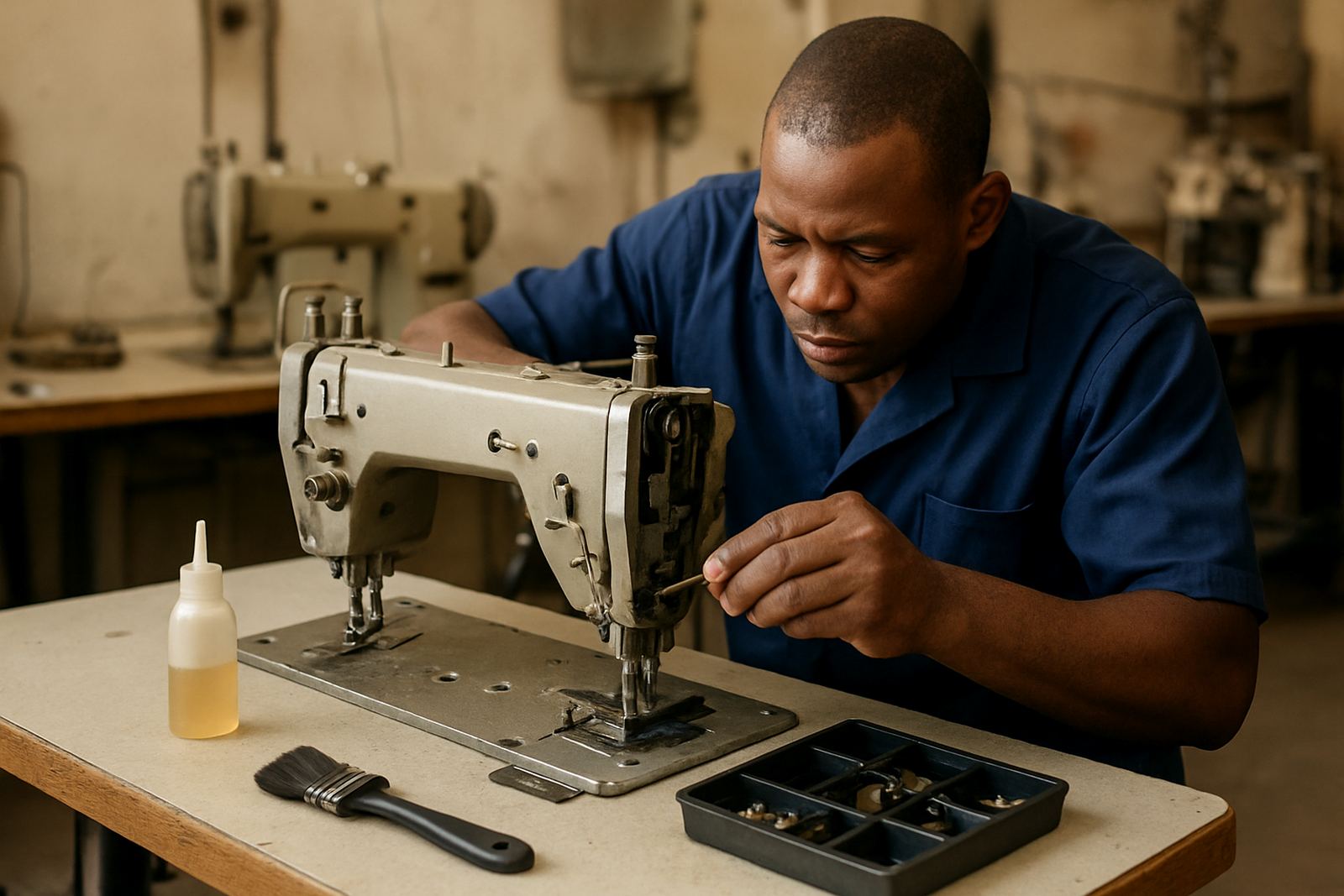
Our workshop team checked the stitch formation on common fabrics used in the room, from cotton shirting to heavier twill and lined sample pieces. Timing was set, feed performance checked and each machine tested for consistent starts and stops. Where the team needed faster thread changes and better handling of special fabrics, we added the right feet, guides and needles for the job.
- Industrial sewing machines for sample stitching and finishing
- Computerised embroidery machine for logo and motif testing
- Fusing press for bonding sample components
- Pressing station for shaping and final presentation
- Attachments, needles, thread stands and spare parts stocked on site
Workshop coordination and operator training
The room was not only about machines, it was about how the team would use them every day. Snethemba Manamela worked with the client on the machine mix and room flow, while Yusuf Patel supervised the workshop setup and final checks. Ripfumelo Buthelezi handled embroidery setup and thread path tuning, and Willem van Wyk completed the on site adjustments once the machines were in position.
We also spent time on operator training. The team needed to know how to switch between sample jobs quickly, how to manage thread tension for different fabrics, and how to keep the embroidery unit clean during busy periods. We went through basic service care, daily oiling points and what to look for after a power cut or a long pressing session.
- Daily start-up checks and oiling points
- Thread tension control for light and medium fabrics
- Embroidery hooping and setting up sample runs
- Safe use of the fusing press and pressing station
- Fault reporting so small issues do not grow into downtime
Timeline and delivery from setup to handover
The full project took three weeks from first visit to handover. Week one covered the site measure, equipment list and room planning. Week two focused on delivery, assembly and machine positioning. Week three was used for calibration, operator handover and final test runs on different sample garments.
By the end of the process the studio was ready for daily work. Machines were positioned so the cutting and sewing steps flowed logically, and the team could move from first sample to fit correction without crossing the room more than necessary. That matters in a room like this, because lost steps cost time and muddle the process.
- Week 1: measure-up, brief confirmation and layout plan
- Week 2: delivery, assembly and installation
- Week 3: setup, testing and operator training
Results and what we would do again
The sample room started producing cleaner first-offs straight away. Stitch quality was more consistent, embroidery setup time came down and the pressing area gave neater presentation for fit reviews. The client also gained a better grip on thread, needles and attachments because the room was stocked for the work it actually does, not just for general sewing.
For a similar sample studio project in Midrand, we would still start with how the room works day to day. Start with the way the room works, not only the machine list. Leave enough space for cutting and fitting, allow for load-shedding recovery, and choose equipment that can be serviced locally without long delays. That is the difference between a room that looks busy and one that keeps up with deadlines.
- Cleaner sample quality and fewer reworks
- Faster embroidery and pressing setup
- Better workflow between cutting, sewing and fitting
- Service access planned in from the start
Key facts
| Project type | Sample studio fit-out for prototyping and limited production |
|---|---|
| Location | Midrand, Gauteng |
| Floor area | 9 m x 7 m sample room |
| Timeline | 3 weeks from site measure to handover |
| Equipment installed | Industrial sewing machines, embroidery machine, fusing press and pressing station |
| Main outcome | Faster sample turnaround with cleaner fit checks and repeatable setup |